
Requirements
Participation in the preparation program (duration ~1 year, once a week); regular attendance at St. At mass with parents; Baptism certificate.
Schedule
First Communion is served in May-June. Preparation starts from the third grade.
REGISTRATION STARTS!
Preparation for the sacraments of RECONCILIATION and EUCHARIST
For the academic year 2026-2027
Dear friends, on September 14 - 25, we invite you to register children for sacramental preparation in our parish in the 2026-2027 school year: in LT and PL languages.
Three main steps to do this:
1. FILL
For the First Communion group, we invite children who are at least 3rd grade to register.
Form that must be filled in:** https://forms.gle/hbdV6XjCGUrKQTeo8**
2. ARRIVAL
September 14-25 (working days only), 16 - 19 p.m. In our parish chapel (entrance from the outside), we will be waiting for you upon your arrival to confirm your registration and present the necessary documents:
- Completed application (print yourself):
https://docs.google.com/document/d/1ov3pnLYmLoBoYW12U9kUxE6kZZmGSjCsNVjbbI6n1UY/edit?usp=sharing
- Baptism certificate.
- Donation to cover preparation costs.
3. LET'S GO TOGETHER!
- We will start separate First Communion group meetings with parents and children from October 5. And we will celebrate the festive Mass of the catechetical school year on October 4. (Sunday) at 15 p.m., after which we will invite the children to the autumn fun festival, parents will have the first parents' meeting with the parish priest and catechists at the same time.
- Families of the Polish group can participate in St. Mass at 13 p.m. (in Polish), and later at 16 p.m. to come to the general meeting of parish parents in the church.
Let's embark on a journey of faith together!
All these mentioned steps are necessary for successful registration.
- Registration reception will be held on September 14-25 from 16:00-19:00 (in the Chapel).
- The number of places is limited. After the registration period, we will not register new candidates.

Share with those who care, and we can't wait to meet you!
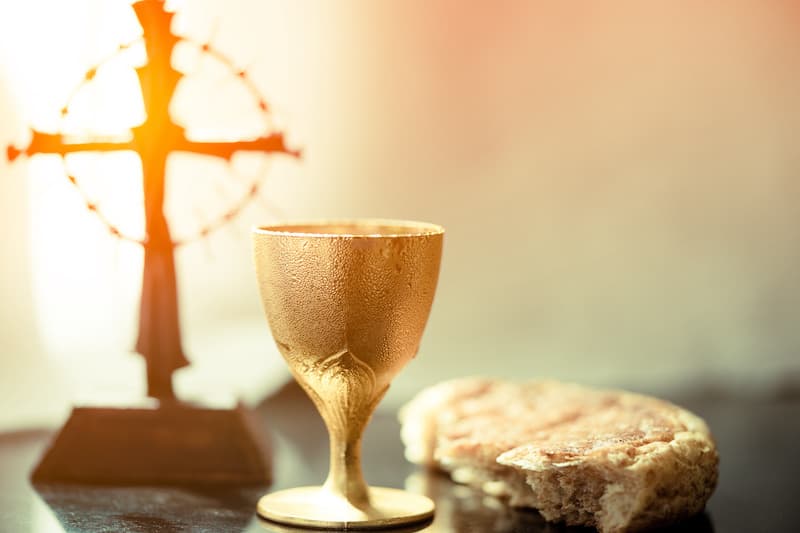
First St. Communion is the first conscious reception of the Eucharist, in which Christ comes to us in the form of Bread and Wine. It is a special holiday for the family and the entire parish community.
Sacrament of the Eucharist is the center and summit of the life of the Church of Christ. Through him, the Church - every day throughout the world - carries out the task that Jesus gave to the apostles on the eve of His Passion: "Do this in remembrance of Me". Therefore, our St. Mass is the commemoration of Jesus' Last Supper. Paul testifies to the Eucharist as a holy legacy: I received this from the Lord and passed it on to you, that the Lord Jesus took bread on the night he was betrayed and, after saying a prayer of thanksgiving, broke it and said: "This is My Body, which is given for you. Do this in remembrance of Me." Also, after supper, He took the cup and said: "This cup is the New Covenant in My Blood. As often as you drink it, do it in remembrance of Me." (1 Cor 11, 23-25).
The Church - each individual community - celebrates the Eucharist, united in a common prayer of thanksgiving and praise, as the community of the Last Supper, committed to the Sacrifice of Jesus Christ. The Eucharist is not only a remembrance of what God has done for us through Jesus Christ. Christ Himself participates in it, He is here and now, and participation in the Eucharist is the realization of being a Christian.
We must share bread, hear one another and help one another, bow down to one another, give one another a hand and embrace one another: to do what and how He did.
Holy Mass consists of 4 parts:
It begins with a greeting, an act of penitence, supplications, a hymn of honor and a daily prayer.
In the Liturgy of the Word, 3 readings from the Bible are read: the first from the Old Testament or from the Acts of the Apostles, the second from the Epistles of the Apostles and finally - one section from some Gospel. The preacher, commissioned by the Church, explains the Word of God so that everyone understands what a Christian should be today. On Sundays and holidays, the Apostles' Creed is spoken or sung. In universal prayer, believers entrust their affairs, joys and sorrows to God.
The community gathered in the Eucharist celebrates the Last Supper of its Lord. The priest speaks the Eucharistic prayer on the authority of Christ. It begins with a song of thanksgiving (preface) and ends with the believers' "Amen". In the name of Jesus Christ and in the performance of his duties, the priest says and does what Jesus said and did. He transforms the gifts, bread and wine we bring to the altar into the Body and Blood of our Lord Jesus Christ (transfiguration) - this is the mystery of our Faith.
● The priest takes the bread and says: "Take and eat it, all of you, for this is My Body, which is given for you."
● The priest takes the cup and says: "Take and drink from it, all of you, for this is the Cup of the New and Eternal Covenant, of My Blood, which is poured out for you and all for the forgiveness of sins. Do this in Remembrance of Me!"
The faithful say the Lord's Prayer (Our Father) and receive the holy Bread, the Body of Christ. In the holy banquet (Holy Communion) they are united with the exalted Lord. We are already enjoying the fruits of His Sacrifice: hanging on the Cross, He won for us reconciliation and forgiveness of sins. He Himself became the Sacrifice and established the New Covenant with His Blood. A member of this Covenant is called to work for the glory of God and the good of men, as the Lord did; even to lay down one's life as He did.
- Eucharist: This word means "thanksgiving". This is the name of the whole holiday, but - apart from the Liturgy of the Word - it is also the second St. Part of the Mass with the Eucharistic prayer. Also the changed Bread, which we reverently receive at all times, is called "Eucharist". To say that the Sacrifice of Jesus Christ is made present in the Eucharistic banquet, we speak of the "Holy Sacrifice". The name of the Holy Mass (in the sense of sending out) is associated with the end of the ceremonies: by saying goodbye, the faithful are sent everywhere to witness Jesus Christ with their daily lives.
- Liturgy of the Word: This is the first St. The name of the part of the Mass, as well as the name of other services in which the Holy Scriptures are read and explained.
- Transformation: Jesus' Words "this is My Body" and "this is My Blood" are not just an image and a parable. We believe that the bread and wine of the Eucharist - our offerings - are transformed into the Body and Blood of our Lord, although their visible form does not change. We believe that in the sacrament of the Eucharist "in the form of these visible things, our Lord Jesus Christ, as true God and Man, is really, really and substantially present" (Council of Trent, 1545-1563). When we talk about Transfiguration, we mean this Mystery of Faith).
- The Sacrifice: "Our Savior at the Last Supper... instituted the Eucharistic Sacrifice of His Body and Blood, so that the Sacrifice which Christ offered on the Cross once for all time would always remain in the present until He comes again...; and commissioned the Church to celebrate the memory of His Death and Resurrection" (II Vatican Council, Constitution on the Sacred Liturgy 47).
Mass for children, youth and family, every Sunday at 15:00 p.m.